Vagus Nerve Stimulation and Cognitive Function: Can VNS Enhance the Mind?
Introduction: Cognitive Decline and the Search for New Approaches
Cognitive decline is one of the defining health challenges of the 21st century. As global populations age, conditions characterised by deteriorating memory, attention, and executive function — from age-related cognitive impairment to Alzheimer's disease — place an escalating burden on individuals, families, and healthcare systems. The World Health Organisation estimates that more than 55 million people currently live with dementia, with nearly 10 million new cases diagnosed each year.
Pharmacological interventions for cognitive decline remain limited. Cholinesterase inhibitors and memantine offer modest symptomatic relief in Alzheimer's disease but do not halt neurodegeneration. Cognitive training programmes show promise in specific domains but lack consistent evidence for broad transfer effects. Against this backdrop, researchers have turned to an unconventional approach: vagus nerve stimulation (VNS).
The vagus nerve — the longest cranial nerve in the body — serves as a major communication highway between peripheral organs and the brain. For a comprehensive overview of how this nerve functions and the different forms of stimulation used to target it, see our complete guide to vagus nerve stimulation. When stimulated electrically, it activates brainstem nuclei that project widely across cortical and subcortical regions involved in arousal, attention, and memory. Over the past two decades, a growing body of preclinical and clinical research has explored whether VNS might enhance cognitive performance — not by targeting a single neurotransmitter receptor, but by modulating the brain's own neuromodulatory systems.
This article examines the evidence for VNS as a cognitive enhancer, from its neurochemical mechanisms to its effects on memory, attention, ageing, and neurodegenerative disease.
The Noradrenergic Mechanism: How VNS Reaches the Brain
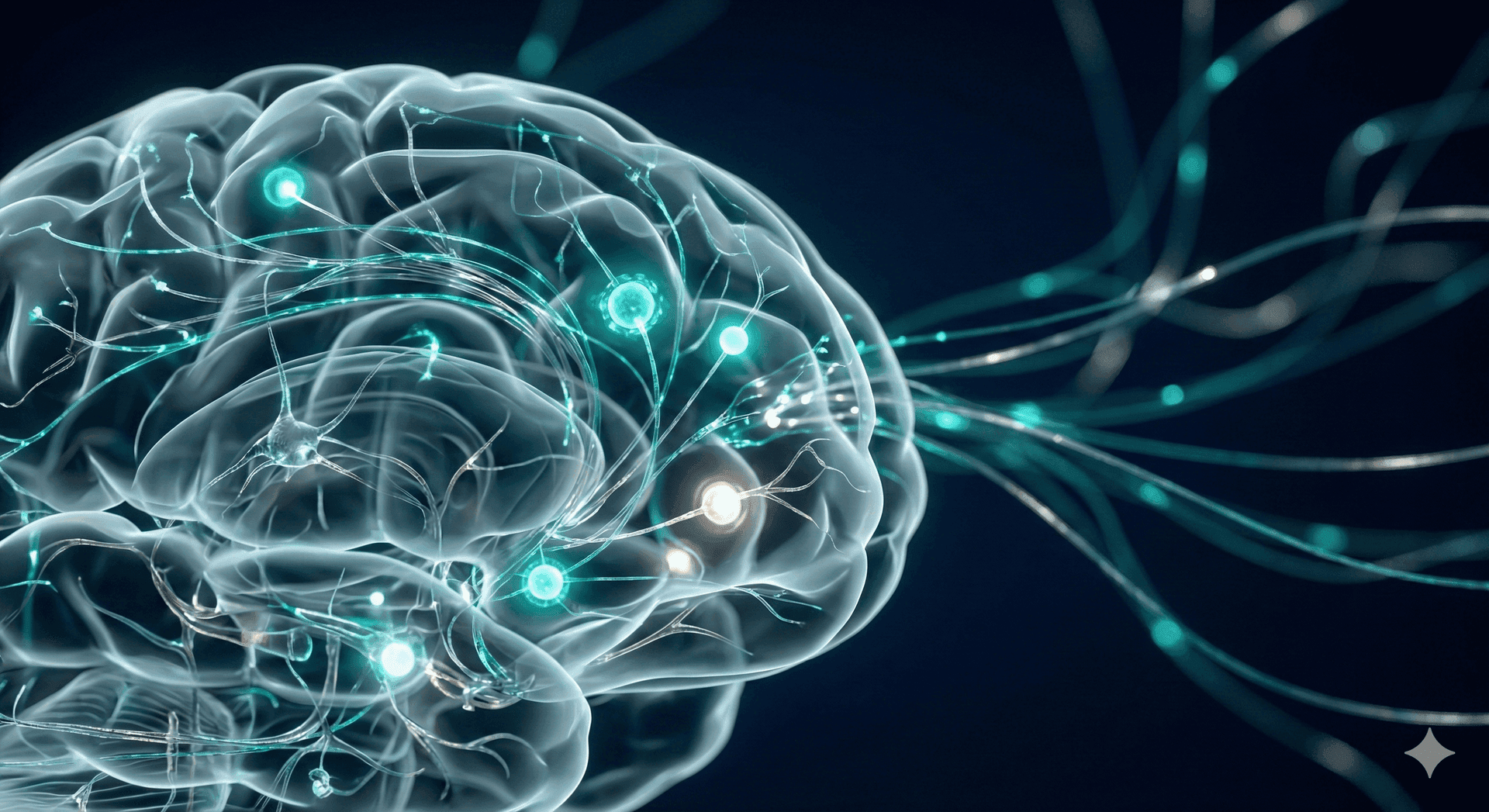
To understand how VNS might influence cognition, it is essential to trace the neural pathway it engages. When electrical impulses are delivered to the vagus nerve — whether through an implanted device on the cervical branch or non-invasively via the auricular branch in the ear — afferent signals travel to the nucleus tractus solitarius (NTS) in the brainstem. The NTS, in turn, sends direct excitatory projections to the locus coeruleus (LC), a pair of small brainstem nuclei that constitute the brain's primary source of noradrenaline.
This pathway — vagus nerve to NTS to locus coeruleus — is the critical link between peripheral nerve stimulation and central cognitive effects.
The Locus Coeruleus–Noradrenaline System
The locus coeruleus is a remarkably influential structure given its modest size. Its noradrenergic neurons project broadly throughout the cerebral cortex, hippocampus, amygdala, thalamus, and cerebellum, modulating neural excitability across virtually the entire forebrain. Noradrenaline released by the LC plays a well-established role in regulating arousal, selective attention, working memory, and the consolidation of long-term memories (Sara, 2009).
Preclinical studies have provided direct electrophysiological evidence that VNS activates the locus coeruleus. Dorr and Debonnel (2006) demonstrated in an animal model that acute VNS increased the firing rate of noradrenergic neurons in the LC, with subsequent enhancement of noradrenergic and serotonergic neurotransmission. Manta et al. (2009) extended these findings, showing that sustained VNS over days to weeks progressively enhanced the firing rates of both noradrenaline neurons in the LC and serotonin neurons in the dorsal raphe nucleus, with the noradrenergic effects appearing first.
The downstream consequences of this LC activation are significant for cognition. Hassert, Miyashita, and Williams (2004) used in vivo microdialysis in rats to show that VNS at memory-modulating intensities produced a 98% increase in noradrenaline output in the basolateral amygdala — a brain region critically involved in emotional memory storage. Crucially, this effect was mediated by ascending (afferent) vagal fibres, confirming that it is the sensory pathway from body to brain that drives the cognitive effects.
Beyond Noradrenaline: Cholinergic Involvement
More recent evidence suggests that VNS also recruits the cholinergic system. Mridha et al. (2021) demonstrated in mice that VNS evoked graded activation of basal forebrain cholinergic axons projecting to the neocortex, with the extent of activation tracking stimulation intensity. Since acetylcholine is a key neuromodulator of attention and cortical plasticity, this dual noradrenergic-cholinergic recruitment may contribute to the breadth of cognitive effects observed with VNS. This same dual mechanism underlies the capacity of VNS to promote neuroplastic changes in cortical circuits, from motor cortex reorganisation to enhanced long-term potentiation in the hippocampus.
Memory Enhancement: From Animal Models to Human Studies
The relationship between VNS and memory has been one of the most extensively investigated areas in VNS cognitive research. The theoretical basis is straightforward: noradrenaline plays a central role in memory consolidation, and VNS activates the noradrenergic system.
Preclinical Foundations
Animal studies established the proof of concept. In the late 1990s, researchers demonstrated that post-training VNS — stimulation delivered shortly after a learning event — could enhance retention of newly acquired information in rodent models. The effect followed an inverted-U dose–response curve: moderate stimulation intensities improved memory, while very low or very high intensities had no effect or were detrimental. This pattern mirrors the classic Yerkes–Dodson relationship between arousal and performance and aligns with what is known about optimal noradrenaline levels for cognitive function.
The Clark et al. (1999) Landmark Study
The first major demonstration of VNS-enhanced memory in humans came from Clark et al. (1999), published in Nature Neuroscience. In this study, epilepsy patients with implanted vagus nerve stimulators underwent a verbal learning task. When VNS was activated at intermediate intensities after the encoding phase, participants demonstrated significantly better word recognition compared to when the stimulator remained off.
This study was pivotal for two reasons. First, it confirmed that the memory-enhancing effects of VNS observed in animals could be replicated in humans. Second, it demonstrated that stimulation applied after learning — during the consolidation window — was sufficient to improve retention, consistent with the noradrenergic modulation hypothesis.
Consolidation, Not Encoding
Ghacibeh et al. (2006) further clarified the stage of memory formation at which VNS exerts its influence. In a study of ten patients with implanted stimulators, VNS had no effect on the initial learning of word lists but significantly enhanced their subsequent retention. This finding suggests that VNS specifically strengthens memory consolidation — the process by which newly encoded information is stabilised into long-term storage — rather than the encoding process itself. The authors attributed this effect to increased activity in the NTS–locus coeruleus adrenergic system.
Non-Invasive VNS and Memory
The development of transcutaneous auricular VNS (taVNS) — which stimulates the vagus nerve non-invasively through the skin of the ear — has enabled researchers to study memory effects in healthy populations without the constraints of working only with implanted patients.
Jacobs et al. (2015) conducted a single-blind, sham-controlled crossover study in 30 healthy older adults (mean age 61 years). Participants received either active taVNS or sham stimulation during a face–name association task. A single session of taVNS significantly enhanced associative memory performance, with the authors proposing that the effect was mediated by increased noradrenaline availability in memory-relevant brain regions, including the hippocampus.
Giraudier, Ventura-Bort, and Weymar (2020) examined whether taVNS could influence recognition memory in 60 healthy volunteers. While overall recognition performance was not significantly different between active and sham groups, taVNS selectively enhanced high-confidence (recollection-based) memory — a finding that suggests VNS may facilitate hippocampus-mediated consolidation processes rather than familiarity-based recognition.
These findings collectively indicate that both invasive and non-invasive VNS can enhance specific aspects of memory, with the most consistent effects observed for consolidation-dependent measures.
Attention and Executive Function
Cognitive performance depends not only on memory but also on the ability to sustain attention, inhibit inappropriate responses, and flexibly adapt behaviour. Evidence suggests that taVNS may modulate these executive processes as well, again likely through its influence on the locus coeruleus–noradrenaline system.
Post-Error Slowing and Cognitive Control
Sellaro et al. (2015) examined the effect of auricular taVNS on post-error slowing — the well-documented tendency for reaction times to increase following an error, reflecting a reorientation of attention and adjustment of cognitive control. In a sham-controlled, between-group design with 40 healthy young volunteers, active taVNS significantly enhanced post-error slowing compared to sham stimulation across two cognitive tasks.
This finding is theoretically significant because post-error slowing is closely linked to phasic noradrenaline release from the locus coeruleus. According to the Adaptive Gain Theory (Aston-Jones & Cohen, 2005), the LC operates in two modes: a tonic mode associated with broad, unfocused attention, and a phasic mode associated with focused attention to task-relevant stimuli. By enhancing phasic LC activity, taVNS appears to sharpen the brain's error-monitoring and attentional adjustment mechanisms.
Working Memory
Sun et al. (2021) investigated the effects of taVNS on working memory in healthy young adults using a spatial working memory paradigm. Active stimulation at the cymba conchae of the ear improved spatial working memory performance compared to sham stimulation, with the authors suggesting that taVNS-enhanced selective attention contributed to improved spatial processing. Notably, the effect was more pronounced for spatial than for digit-based working memory tasks, suggesting domain-specific modulation.
Divergent Thinking
In an intriguing extension of VNS cognitive research, Colzato, Ritter, and Steenbergen (2018) examined whether taVNS could influence creative cognition. Using a sham-controlled design with 80 healthy volunteers, they found that active taVNS enhanced divergent thinking — the ability to generate multiple novel solutions to an open-ended problem — as measured by the Alternate Uses Task. However, convergent thinking (requiring identification of a single correct solution) was not significantly affected. The authors proposed that the effect may involve GABA-mediated mechanisms in addition to the noradrenergic pathway.
These findings suggest that the cognitive effects of VNS extend beyond memory to encompass attentional control, working memory, and even creative flexibility. However, effect sizes are generally modest, and not all studies have produced consistent results across every cognitive domain tested.
Ageing and Cognitive Decline
The potential relevance of VNS to age-related cognitive decline is particularly compelling. Ageing is associated with progressive degeneration of the locus coeruleus and declining noradrenaline levels, which contribute to the attentional deficits and memory impairments observed in older adults (Mather & Harley, 2016). If VNS can upregulate LC–noradrenergic function, it may help compensate for these age-related changes.
The Bretherton et al. (2019) Study
Bretherton et al. (2019) conducted a series of studies examining the effects of taVNS in individuals aged 55 years and above. Across three sub-studies, the investigators assessed the acute and chronic effects of taVNS delivered to the tragus of the ear.
In the chronic arm of the study, 29 participants received daily taVNS for two weeks. The results were encouraging: daily stimulation significantly improved autonomic function (as measured by heart rate variability and baroreflex sensitivity) and was associated with improvements in quality of life, mood (including reduced depression, tension, and overall mood disturbance), and subjective well-being.
While this study primarily assessed autonomic and psychological outcomes rather than cognitive performance directly, the findings are relevant to cognition for two reasons. First, autonomic dysfunction is increasingly recognised as a contributor to cognitive decline in ageing. Second, the improvements in mood and vitality — which are closely linked to attentional capacity and motivation — suggest that taVNS may support the broader physiological conditions necessary for healthy cognitive function in older adults.
Associative Memory in Older Adults
As noted above, Jacobs et al. (2015) demonstrated that a single session of taVNS could enhance face–name associative memory in healthy older adults. This finding is particularly relevant because associative memory — the ability to bind together distinct elements of an experience — is one of the cognitive functions most vulnerable to age-related decline and hippocampal atrophy. The authors proposed that taVNS, by increasing noradrenaline release via the LC, may partially restore the neuromodulatory tone that supports hippocampal memory processes.
Implications for Healthy Ageing
Taken together, these findings suggest that taVNS may offer a non-invasive approach to supporting cognitive health in ageing populations. However, the evidence remains preliminary. Most studies have examined acute, single-session effects; the longer-term cognitive benefits of sustained taVNS protocols in older adults have yet to be rigorously evaluated in large-scale, double-blind trials.
Alzheimer's Disease: Early-Stage Research
The possibility that VNS might benefit patients with Alzheimer's disease has been explored in a small number of pilot studies, motivated by the observation that the locus coeruleus is one of the earliest brain structures affected by Alzheimer's pathology (Braak et al., 2011).
The Sjogren et al. (2002) Pilot Study
Sjogren et al. (2002) conducted the first pilot study of invasive VNS in Alzheimer's disease, enrolling 10 patients with probable AD who received cervical VNS via an implanted device. After six months of stimulation, seven patients (70%) showed improvement or stability on the Alzheimer's Disease Assessment Scale–Cognitive Subscale (ADAS-cog) and Mini-Mental State Examination (MMSE).
One-Year Follow-Up
Merrill et al. (2006) extended the study with additional patients and a one-year follow-up. In the expanded cohort of 17 patients, 7 (41%) improved or did not decline on the ADAS-cog, while 12 (71%) maintained stability or improved on the MMSE. CSF biomarker analysis revealed a trend towards reduced total tau levels (4.8% reduction, p = 0.057), a finding of potential interest given that tau accumulation is a hallmark of Alzheimer's disease progression.
VNS was well tolerated throughout the study period, and no significant decline in mood, behaviour, or quality of life was observed.
Interpretation and Caution
While these results are encouraging in suggesting that VNS may slow cognitive decline in some AD patients, several important caveats apply. Both studies were small, open-label, and lacked control groups, making it impossible to rule out placebo effects or natural variability in disease progression. The trend in CSF tau reduction, while intriguing, did not reach conventional statistical significance. These pilot findings provide a rationale for further investigation but do not constitute evidence that VNS is an effective treatment for Alzheimer's disease.
The proposed mechanism is nonetheless plausible: by activating the locus coeruleus and increasing noradrenaline release, VNS may partially compensate for the noradrenergic deficit that occurs early in Alzheimer's disease. Noradrenaline has anti-inflammatory and neuroprotective properties, and its depletion has been linked to accelerated amyloid pathology in animal models (Heneka et al., 2010).
Limitations and Open Questions
Despite the promising nature of these findings, it is important to acknowledge the significant limitations that currently constrain the field.
Small Sample Sizes
The majority of studies examining VNS and cognition have enrolled relatively small numbers of participants — often fewer than 50, and in some cases fewer than 20. This limits statistical power and increases the risk that observed effects may not replicate in larger, more diverse populations.
Acute vs. Chronic Effects
Most taVNS studies have examined the cognitive effects of single-session or short-term stimulation protocols. Whether the acute memory and attention enhancements observed in laboratory settings translate into meaningful, sustained cognitive benefits with regular use remains unclear. The few studies employing multi-week protocols (such as Bretherton et al., 2019) have assessed primarily autonomic and mood outcomes rather than standardised cognitive measures.
Inconsistent Findings
Not all studies have found positive effects of VNS on cognition. Some investigations have reported no significant improvement in verbal memory, attention, or executive function following taVNS in healthy volunteers. These inconsistencies may reflect differences in stimulation parameters (intensity, frequency, duration, site of stimulation), individual variability in vagal anatomy, or the specific cognitive tasks employed. The field has not yet converged on optimal stimulation protocols for cognitive enhancement.
Mechanistic Uncertainty
While the locus coeruleus–noradrenaline pathway is the most well-established mechanism linking VNS to cognition, the complete picture is likely more complex. VNS also modulates serotonin, GABA, and acetylcholine, and the relative contribution of each neurotransmitter system to specific cognitive effects remains poorly understood.
Clinical Translation
The gap between laboratory demonstrations of acute cognitive enhancement and clinically meaningful outcomes for patients with cognitive disorders remains substantial. Demonstrating that taVNS can improve word recall in a controlled experiment is qualitatively different from showing that it can slow cognitive decline in Alzheimer's disease or improve daily functioning in older adults with mild cognitive impairment.
Conclusion
The evidence assembled over the past two decades indicates that vagus nerve stimulation — both invasive and non-invasive — can modulate cognitive processes in measurable ways. Through its activation of the locus coeruleus and the subsequent release of noradrenaline across cortical and subcortical regions, VNS has been shown to enhance memory consolidation, sharpen attentional control, and improve associative learning in both clinical populations and healthy volunteers.
The mechanistic foundation is robust: the vagus nerve–NTS–locus coeruleus pathway is well characterised, and the role of noradrenaline in attention and memory is supported by decades of neuroscience research. The emergence of taVNS as a non-invasive, accessible modality has opened this field to broader investigation, enabling studies in healthy populations and older adults that would not be feasible with implanted devices alone.
Yet the field remains in its early stages. Most studies are small, short-term, and conducted in laboratory settings. The optimal stimulation parameters for cognitive enhancement have not been established. Long-term benefits, if they exist, have not been demonstrated. And the promising but preliminary findings in Alzheimer's disease require validation in adequately powered, controlled clinical trials.
What the research does suggest is that the vagus nerve represents a genuine and scientifically grounded avenue for cognitive modulation — one rooted not in speculation but in identifiable neural pathways and measurable neurochemical effects. As stimulation protocols are refined, study designs improve, and larger trials are conducted, the full potential of VNS for cognitive health will become clearer.
---
References
1. Aston-Jones, G., & Cohen, J. D. (2005). An integrative theory of locus coeruleus–norepinephrine function: Adaptive gain and optimal performance. Annual Review of Neuroscience, 28, 403–450.
2. Braak, H., Thal, D. R., Ghebremedhin, E., & Del Tredici, K. (2011). Stages of the pathologic process in Alzheimer disease: Age categories from 1 to 100 years. Journal of Neuropathology and Experimental Neurology, 70(11), 960–969.
3. Bretherton, B., Atkinson, L., Murray, A., Clancy, J., Deuchars, S., & Deuchars, J. (2019). Effects of transcutaneous vagus nerve stimulation in individuals aged 55 years or above: Potential benefits of daily stimulation. Aging, 11(14), 4836–4857.
4. Broncel, A., Bocian, R., Klos-Wojtczak, P., Kulbat-Warycha, K., & Konopacki, J. (2020). Vagal nerve stimulation as a promising tool in the improvement of cognitive disorders. Brain Research Bulletin, 155, 37–47.
5. Clark, K. B., Naritoku, D. K., Smith, D. C., Browning, R. A., & Jensen, R. A. (1999). Enhanced recognition memory following vagus nerve stimulation in human subjects. Nature Neuroscience, 2(1), 94–98.
6. Colzato, L. S., Ritter, S. M., & Steenbergen, L. (2018). Transcutaneous vagus nerve stimulation (tVNS) enhances divergent thinking. Neuropsychologia, 111, 72–76.
7. Dorr, A. E., & Debonnel, G. (2006). Effect of vagus nerve stimulation on serotonergic and noradrenergic transmission. Journal of Pharmacology and Experimental Therapeutics, 318(2), 890–898.
8. Ghacibeh, G. A., Shenker, J. I., Shenal, B., Uthman, B. M., & Heilman, K. M. (2006). The influence of vagus nerve stimulation on memory. Cognitive and Behavioral Neurology, 19(3), 119–122.
9. Giraudier, M., Ventura-Bort, C., & Weymar, M. (2020). Transcutaneous vagus nerve stimulation (tVNS) improves high-confidence recognition memory but not emotional word processing. Frontiers in Psychology, 11, 1276.
10. Hassert, D. L., Miyashita, T., & Williams, C. L. (2004). The effects of peripheral vagal nerve stimulation at a memory-modulating intensity on norepinephrine output in the basolateral amygdala. Behavioral Neuroscience, 118(1), 79–88.
11. Heneka, M. T., Nadrigny, F., Regen, T., Martinez-Hernandez, A., Dumitrescu-Ozimek, L., Terwel, D., Jardanhazi-Kurutz, D., Walter, J., Kirchhoff, F., Hanisch, U. K., & Kummer, M. P. (2010). Locus ceruleus controls Alzheimer's disease pathology by modulating microglial functions through norepinephrine. Proceedings of the National Academy of Sciences, 107(13), 6058–6063.
12. Jacobs, H. I. L., Riphagen, J. M., Razat, C. M., Wiese, S., & Sack, A. T. (2015). Transcutaneous vagus nerve stimulation boosts associative memory in older individuals. Neurobiology of Aging, 36(5), 1860–1867.
13. Manta, S., Dong, J., Debonnel, G., & Bhier, P. (2009). Enhancement of the function of rat serotonin and norepinephrine neurons by sustained vagus nerve stimulation. Journal of Psychiatry and Neuroscience, 34(4), 272–280.
14. Mather, M., & Harley, C. W. (2016). The locus coeruleus: Essential for maintaining cognitive function and the aging brain. Trends in Cognitive Sciences, 20(3), 214–226.
15. Merrill, C. A., Jonsson, M. A. G., Minthon, L., Ejnell, H., C-son Silander, H., Blennow, K., Karlsson, M., Nordlund, A., Rolstad, S., Warkentin, S., Ben-Menachem, E., & Sjogren, M. J. C. (2006). Vagus nerve stimulation in patients with Alzheimer's disease: Additional follow-up results of a pilot study through 1 year. Journal of Clinical Psychiatry, 67(8), 1171–1178.
16. Mridha, Z., de Gee, J. W., Shi, Y., Alkashgari, R., Williams, J., Suminski, A., Ward, M. P., Bhatt, D., & McGinley, M. J. (2021). Graded recruitment of pupil-linked neuromodulation by parametric stimulation of the vagus nerve. Nature Communications, 12, 1539.
17. Sara, S. J. (2009). The locus coeruleus and noradrenergic modulation of cognition. Nature Reviews Neuroscience, 10(3), 211–223.
18. Sellaro, R., van Leusden, J. W. R., Tona, K.-D., Verkuil, B., Nieuwenhuis, S., & Colzato, L. S. (2015). Transcutaneous vagus nerve stimulation enhances post-error slowing. Journal of Cognitive Neuroscience, 27(11), 2126–2132.
19. Sjogren, M. J. C., Hellstrom, P. T. O., Jonsson, M. A. G., Runnerstam, M., C-son Silander, H., & Ben-Menachem, E. (2002). Cognition-enhancing effect of vagus nerve stimulation in patients with Alzheimer's disease: A pilot study. Journal of Clinical Psychiatry, 63(11), 972–980.
20. Sun, J.-B., Cheng, C., Tian, Q.-Q., Yuan, H., Yang, X.-J., Deng, H., Guo, X.-Y., Cui, Y.-P., Zhang, M.-K., Yin, Z.-X., Wang, C., & Qin, W. (2021). Transcutaneous auricular vagus nerve stimulation improves spatial working memory in healthy young adults. Frontiers in Neuroscience, 15, 790793.