Clinical / academic reference (classic)
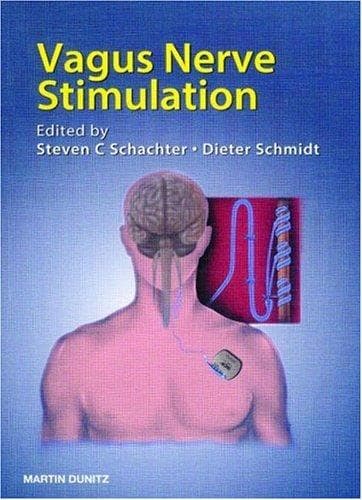
Vagus Nerve Stimulation
Clinical text (2nd edition)
Steven C. Schachter & Dieter Schmidt (eds.)
2002 · Martin Dunitz / Taylor & Francis
Our review
This is where the clinical literature on vagus nerve stimulation effectively begins. Long before the vagus nerve became a wellness topic, VNS was a neurosurgical treatment for hard-to-control epilepsy, and Schachter and Schmidt's edited volume is one of the foundational clinical texts of that era — the record of the field when it was strictly a matter of implanted devices and refractory seizures.
The book's centre of gravity is epilepsy: the rationale for stimulating the vagus, the implantation procedure, patient selection, and outcomes in people whose seizures resisted medication. This second edition also reflects the moment depression was emerging as a new indication, capturing VNS at an inflection point between its epilepsy origins and its psychiatric future. Read today, it's as much a historical document as a clinical one — a snapshot of what was known and hoped for two decades ago.
Which is exactly where the caveats lie. Published in the early 2000s, it predates non-invasive stimulation (taVNS, tcVNS) entirely and has been overtaken clinically by newer comprehensive references — most directly the 2025 Elsevier volume also on this shelf. Its dosing, outcome data, and framing should be read as of their time, not as current practice. Its worth now is orientation and lineage, not bedside guidance.
On this shelf: the historical bedrock. If the Elsevier reference is where the clinical field stands today, this is where it stood at the start — valuable for understanding how VNS grew from an epilepsy device into everything the other books discuss.
Best for: readers interested in the clinical and historical roots of VNS — particularly its epilepsy origins — who will pair it with a current reference for present-day practice.
Explore the evidence