Practical self-help — polyvagal
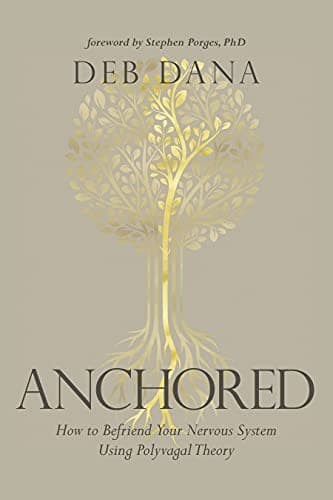
Anchored
How to Befriend Your Nervous System Using Polyvagal Theory
Deb Dana
2021 · Sounds True
Our review
Deb Dana's gift is translation. She is the clinician who took Stephen Porges' dense polyvagal theory and made it usable for therapists; Anchored is her turning it outward for everyone else. If Porges' original is the architecture, this is the guided tour — warm, plainly written, and built around a single practical promise: that you can learn to read your own nervous system and gently shift its state.
The core vocabulary is Dana's clinical framework — states of safety and connection, mobilisation, and shutdown, and the idea of neuroception, the below-conscious way the body scans for cues of safety or threat. Around this she builds accessible practices: noticing which state you're in, mapping your own patterns, and cultivating "glimmers," the small moments that nudge you toward regulation. For readers who find the science intimidating, it is probably the friendliest on-ramp in the whole category.
Honesty requires naming the foundation, though. Anchored rests on polyvagal theory, and the theory's neuroanatomical and evolutionary claims are the subject of genuine, current scientific dispute (see the analysis of Porges' original for the details). That doesn't make the book's practices worthless — many are simply gentle attention and self-regulation exercises that stand on their own — but the confident biological framing should be read as an interpretive lens, not established fact. This is a self-help book, not a clinical trial.
On this shelf: the accessible companion to Porges. Read Anchored for the felt sense and the practices; read Porges to see the contested engine underneath; read Rosenberg if you want the more physical, body-based version of the same lineage.
Best for: the general reader who wants polyvagal ideas made warm and practical, without the academic density — provided they hold the biology lightly.
Explore the evidence